What Is the Gut-Brain Axis? A Plain-English Guide

You've probably felt it: butterflies before a big meeting, or losing your appetite when you're stressed. That's your gut and brain talking. Scientists call this two-way connection the gut-brain axis, and it's one of the busiest areas of health research today.
What the gut-brain axis is
The gut-brain axis is the communication network between your digestive system, the trillions of microbes living in it (your gut microbiome) and your brain. Signals travel in both directions: your brain affects your gut, and your gut sends information back to your brain.
How the gut and brain communicate
Researchers describe several channels working at the same time:
- The vagus nerve: a long nerve that runs from the brainstem to the abdomen and carries signals both ways.
- Hormones: the stress-hormone system (the HPA axis) links how you feel with how your gut behaves.
- The immune system: much of the immune system sits in the gut, and immune messengers called cytokines can reach the brain.
- Microbial products: gut bacteria break down fiber into short-chain fatty acids and influence compounds like tryptophan and serotonin. Some of these act on nerves in the gut.
What science knows, and what it doesn't
The link itself is well established. What isn't settled is how strongly specific bacteria, foods or supplements change mood or thinking in people. Much of the detailed evidence still comes from animal and lab studies. A 2018 review in Frontiers in Neuroscience describes some of the proposed pathways as “still hypothetical” in humans. Treat bold claims about a single product with healthy skepticism.
Everyday habits that support gut health
- Eat a variety of plants: vegetables, fruit, legumes, whole grains, nuts and seeds feed your gut bacteria.
- Include fermented foods like yogurt, kefir, sauerkraut or kimchi if you enjoy them.
- Keep a regular sleep schedule.
- Move your body most days.
- Find ways to manage stress, since stress affects digestion through the same pathways.
Where Amare fits in
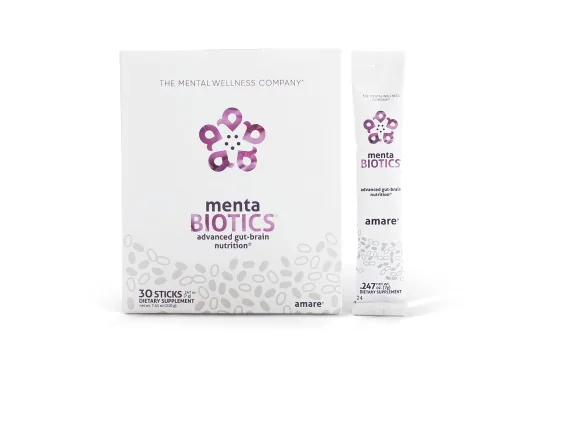
Amare builds its products around the gut-brain axis. MentaBiotics®, for example, combines probiotics, prebiotic fibers and plant extracts and is designed to support the gut-brain connection.* Supplements work best on top of the habits above, not instead of them. Talk to your doctor before starting any supplement, especially if you take medication or have a health condition.
I'm an independent Amare Brand Partner and earn a commission when you order through links on this site. That doesn't change the price you pay.